
Tab Article
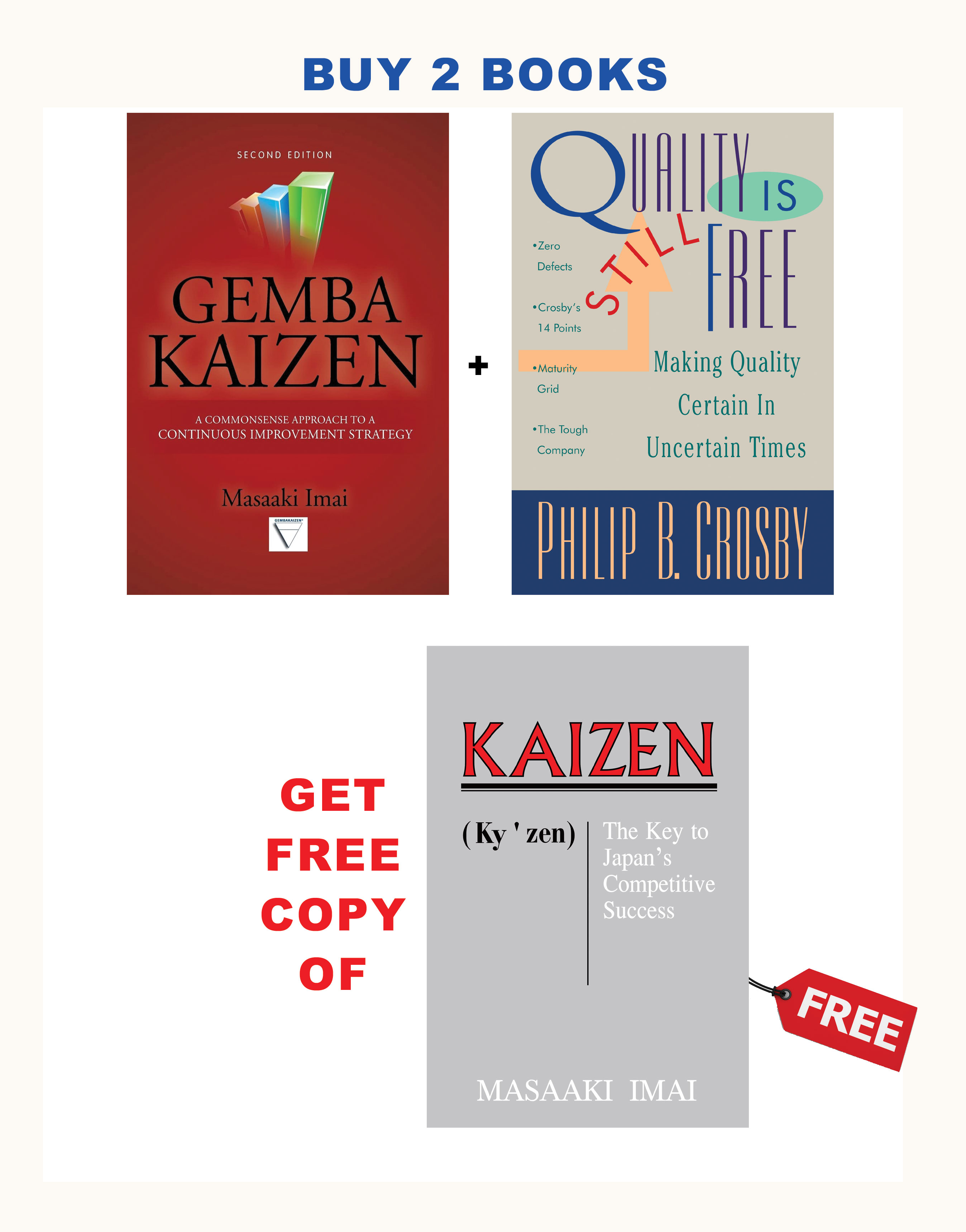
Gemba Kaizen : A Commonsense Approach to a Continuous Improvement Strategy, 2nd Edition
Written by Masaaki Imai, pioneer of modern business operational excellence and founder of the Kaizen Institute, Gemba Kaizen, Second Edition is an in-depth revision of this renowned, best-selling work. The book reveals how to implement cost-effective, incremental improvements in your most critical business processes. Global case studies from a wide range of industries demonstrate how gemba kaizen has been successfully used to:
Maximize capacity and reduce inventory at Unga Limited, one of Kenya's largest flour-milling operations
Change the IT culture at Achmea, a large European insurance firm
Exceed customer expectations at Walt Disney World in the United States
Improve quality at Inoue Hospital in Japan
Transform retail processes at Sonae MC, Portugal's largest employer
Practice daily kaizen at Tork Ledervin, a weaving plant in Brazil
Stamp out muda at Sunclipse, an industrial packaging distributor in the United States
Manage quality improvement by total workforce involvement at Xuji Group Corporation, an electrical manufacturer in China
Implement gemba kaizen at many other companies worldwide
Quality Is Still Free : Making Quality Certain In Uncertain Times
Crosby wrote an excellent book that is very useful to managers, quality professional and any individual concerned about quality. The author clearly explains the meaning of quality, which is conformity to requirements. He also shows a useful way to measure quality in terms of cash and not just the usual metrics such as the number of rejects per specified number of units produced. The profits that would flow from producing quality products and services is a good measure. Crosby explains that adopting the cost effective practice of preventing errors will result in avoiding rework, scrap or servicing, which result in increased profits.
The author explains that quality processes should pervade the whole organisation, including areas like public relations or industrial relations, and not confined to customer specific areas.
The book is practical oriented with the author providing some suggestions on how to implement his philosophies in a manufacturing organisation. The book is a bit dated but this does little to diminish the quality of the author''s message. The book is applicable to all organisations in any industry, although the author had a bias towards manufacturing enterprises. This is a classic book that is highly recommended.
"Still Free" is just an account of Crosby''s career from his earliest work experiences, through ITT to his own quality consulting firm. The focus, however, is almost always on quality philosophy and implementation, rather than personal matters - they are touched on only to illustrate the professional aspects. Generally, it is a good account but I doubt that this is a reasonable form of explaining author''s quality philosophy because it''s intrinsically simple and intuitive; as far as can be seen from the book, it has not evolved much over years of its application by the author. This being the case, it is not worth explaining in this particular form.